
Pinball Deluxe: Reloaded
Made Of BitsArcade
4.78.42K Reviews
- Version
- 3.0.2
- Installs
- 5.00M
- Age Rating
- Everyone
Screenshots
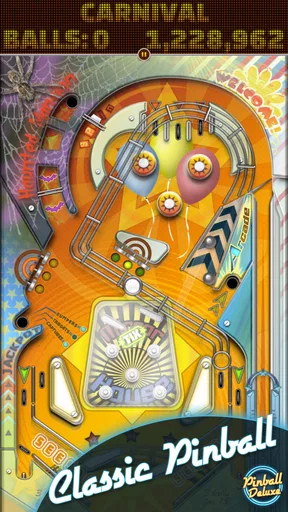
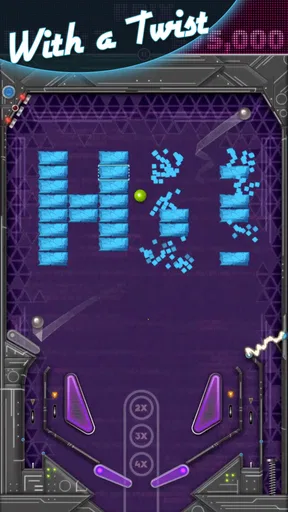
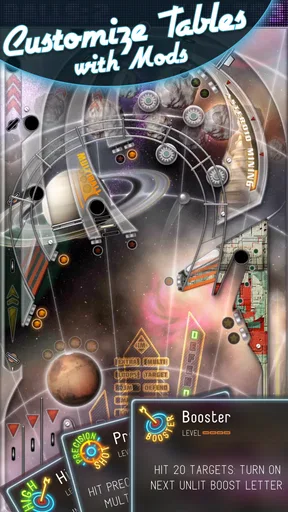
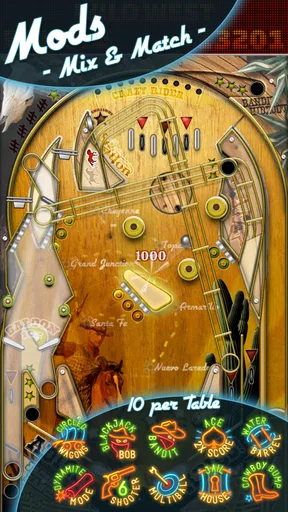
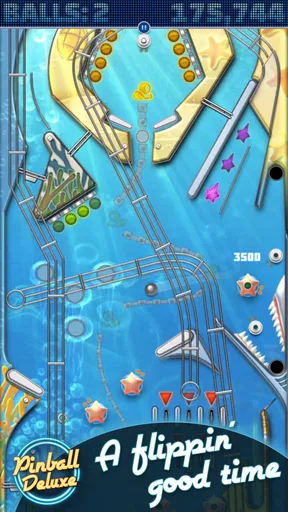
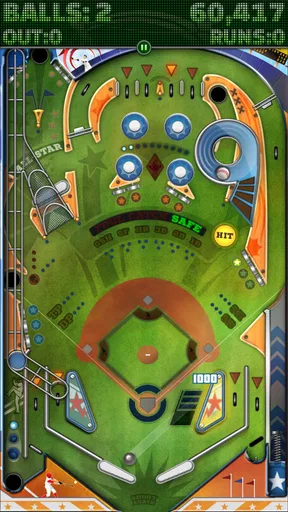
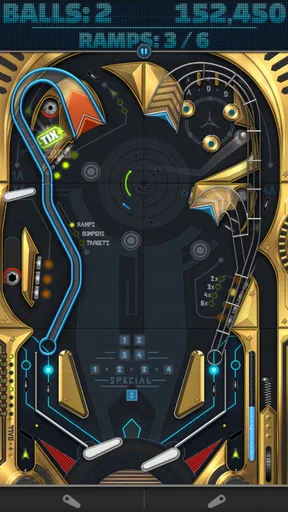
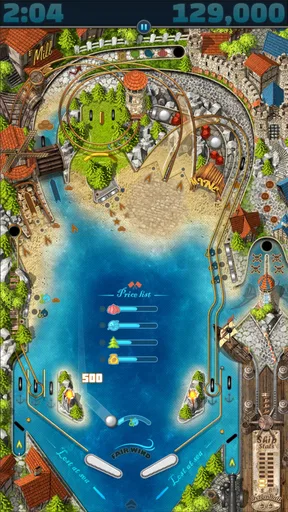
Our Review of Pinball Deluxe: Reloaded
 Analysis by Appyee
I can recommend Pinball Deluxe: Reloaded to anyone who wants a quick arcade game that feels immediately familiar. I installed it expecting a simple digital pinball table, but the six-table setup gives it more staying power than a one-screen time filler. The controls are easy to understand, the balls move quickly enough to keep short sessions lively, and I can start playing without spending time learning a complicated system.
That simplicity is the main reason I kept returning to it. This is not a slow, story-heavy game that asks for a long commitment. It is built around the pleasant loop of launching a ball, reacting to what is happening, trying to keep the table active, and starting again after a mistake. In my experience, it works best when I have a few spare minutes and want something interactive rather than another passive distraction.
Why the six tables make short sessions worthwhile
Made Of Bits has placed this game firmly in the arcade tradition, and that is useful to know before downloading it. The appeal is not a long campaign or a detailed narrative. The appeal is the immediate physical rhythm of pinball: watch the ball, time the flippers, aim for useful targets, and try to improve the next attempt.
The six customizable tables are important because they prevent the experience from feeling like one repeated layout. Each table gives me a different visual and tactical space to explore, while customization adds a personal layer to the otherwise classic format. I do not need to master every table before enjoying the game. I can choose the one that suits my mood, experiment with its arrangement, and move on when I want a change.
The best feature here is not complexity; it is low friction. I can open the game, select a table, and get into the action quickly. That makes it a good companion for a commute, a short break, or the few minutes before an appointment. It also means the game does not punish me for playing in small pieces. A long uninterrupted session can be enjoyable, but it is not required for the game to make sense.
The retro presentation supports that purpose. It gives the game a clear arcade identity without asking me to treat it like a modern simulation. The result feels more like a digital cabinet designed for repeated attempts than a full recreation of a physical pinball venue. Players who enjoy bright, immediate arcade feedback will probably understand the attraction within the first session.
How the controls feel during a real attempt
Pinball controls succeed or fail on responsiveness. If a flipper reacts late, even a good player can feel cheated; if it reacts too sharply, beginners may struggle to build confidence. My experience with this game is that the basic interaction is approachable, which is exactly what I want from a mobile pinball title. I can concentrate on timing and positioning instead of wrestling with a large control scheme.
There is still a learning curve, but it comes from the ball and table rather than from complicated menus. Early attempts are mostly about getting comfortable with the pace. After that, I start noticing where I am losing control and which targets deserve more attention. That gradual improvement gives each restart a purpose instead of making failure feel completely random.
For a practical routine, I would begin with one table and play several short attempts before changing anything. This makes it easier to recognize useful lanes and dangerous areas. Once the layout feels familiar, customization becomes more meaningful because I can judge whether a change improves my flow or simply makes the table harder to read.
This is also where the game differs from many casual arcade alternatives. A typical endless runner or match-style game often gives me a fixed pattern of swipes or taps. Here, the same basic controls can produce different outcomes because the ball’s movement keeps changing. That unpredictability gives pinball a more tactile feeling, even on a touchscreen.
A good fit for interrupted play
Short-session games need to tolerate interruptions gracefully. I often play mobile games while waiting for food, sitting in a lobby, or taking a quick break from work. In those situations, I may need to stop suddenly rather than finish a level. Pinball Deluxe: Reloaded fits that kind of use better than games that depend on a long sequence of actions or a carefully timed mission.
The key advantage is that the game’s basic goal is always understandable. I do not have to remember a complicated objective after looking away from the screen. When I return, I can focus on the current table and continue the immediate challenge. That clarity matters more to me than a large amount of content when I am playing in short bursts.
I would still avoid opening it when I know I will be interrupted every few seconds. Pinball demands attention while the ball is moving, and a sudden distraction can end an attempt. The game is interruption-tolerant in the broader sense that it suits brief visits, but it cannot remove the need to watch the table during active play. That distinction is important for anyone looking for a game they can play entirely while multitasking.
For the best experience, I use it in two modes. During a very short break, I play one or two attempts and treat the result as disposable. When I have more time, I stay with one table and experiment with customization. The first mode delivers immediate pleasure; the second gives the game more depth and helps prevent the tables from blending together.
Returning after a break
One question I had with a pinball game was whether it would remain enjoyable after the novelty wore off. The answer depends on what I expect from it. If I want a large progression system, a story, or a steady stream of new objectives, this may feel limited. If I enjoy improving through repeated play, the design makes more sense.
Replay value comes from the combination of table variety, personal adjustments, and the desire to make a cleaner attempt. I can return to a familiar table and immediately understand what I am trying to do, yet the ball never follows a perfectly predictable route. That balance is useful: the game is recognizable enough for a quick return, but not so fixed that every attempt feels identical.
My advice is not to rush through all six tables in one sitting. Doing that can flatten the differences between them. I get more from the game when I spend time learning one layout, change its setup, and then compare the new experience with the original. This approach turns customization into a practical tool rather than a decorative option.
Another helpful habit is to judge progress by decision-making, not only by the final score. A failed attempt can still teach me which shots are risky, when I am reacting too late, or whether I am relying on one area of the table. That mindset makes the game less frustrating and gives repeated sessions a clearer purpose.
Where the game may lose some players
The same focused design that makes this game accessible can make it feel narrow for some players. There is no need to expect a broad adventure structure from it. It is a dedicated pinball experience, and its variety comes from tables and replay rather than from changing genres or introducing a large cast of characters.
Players who dislike repetition should think carefully before choosing it. Even with six tables, the central activity remains pinball. If the basic loop does not feel satisfying after the first few attempts, customization will not completely change that. I would choose a more varied arcade collection for someone who wants several different types of challenges in one app.
The free entry point is welcome, but the game includes optional in-app purchases ranging from $0.99 to $19.99 per item. That makes it worth checking the purchase flow before handing the phone to a child, even though the content rating is Everyone. I appreciate being able to try the core experience without paying upfront, but players who prefer a completely purchase-free environment may be more comfortable with a premium alternative.
There is also a difference between quick fun and deep simulation. This game is a better choice for someone who wants a responsive mobile interpretation of pinball than for a player searching for a highly realistic physical-machine study. I enjoy the former, especially on a phone, but I would use a more specialized option if accurate table simulation were my main priority.
Practical details before installing
The game is free to download and is suitable for Everyone, which makes it easy to recommend as a casual option for a shared device. It was released on November 20, 2016, and the current version is 3.0.2. The minimum requirement is Android 6.0, so owners of older phones should check compatibility before trying it.
Its reach is a useful sign of how approachable the concept is: it has passed five million installs, with an average rating of 4.7 from around 94 thousand ratings and about 8.4 thousand written reviews. Those figures do not replace personal experience, but they do suggest that the straightforward arcade format has connected with a large audience.
I would install it for a player who likes classic arcade mechanics, quick retries, and games that can be enjoyed without a long tutorial. It is especially suitable for someone who wants a small, repeatable activity during spare moments. The six-table structure gives enough room to explore without making the game feel like a major time commitment.
I would skip it for someone who needs constant novelty, a narrative campaign, or a game that can be played while barely looking at the screen. I would also hesitate to recommend it to anyone who finds repeated score-chasing unrewarding. The game asks me to enjoy the process of learning a table and trying again; without that interest, its strengths become less meaningful.
My everyday verdict on the replay loop
In a normal week, I can imagine using this game in two very different ways. On a busy day, I might play a single attempt while waiting for a meeting to begin. I do not need to remember a quest or prepare a loadout, and the arcade action gives me a quick mental reset. On a quieter evening, I might choose one table, adjust it, and spend longer trying to improve my control.
That range is the reason I find the game more useful than its simple premise suggests. It does not demand a fixed schedule. It can be a tiny diversion or a focused score-chasing session, depending on how much attention I have available. The transition between those modes is natural because the controls and objective remain clear.
Compared with endless runners, it offers less automatic forward motion and more reactive timing. Compared with match-style arcade games, it provides less puzzle planning but more physical unpredictability. Compared with a full pinball simulator, it feels easier to approach and better suited to casual mobile play, while offering less reason to expect exhaustive realism. Those trade-offs make its audience fairly clear.
My strongest tip is to resist treating every table as something to complete immediately. Pick the layout you enjoy most, learn how the ball behaves, and use customization to test a specific change. That creates a small personal experiment inside each session. It is a more rewarding way to play than simply bouncing between tables whenever an attempt ends.
Overall, Pinball Deluxe: Reloaded succeeds because it understands the value of an immediate arcade loop. I can begin quickly, enjoy a meaningful attempt in a short window, and return later without relearning the entire game. The repetition is real, and the optional purchases may not suit everyone, but the free starting point and six customizable tables give the experience a solid amount of room.
For me, this is best viewed as a dependable pocket pinball game rather than an all-purpose arcade package. It is a strong choice when I want quick feedback, clear controls, and replay built around improving my own decisions. If that sounds like the kind of session you enjoy, Made Of Bits has created an easy game to pick up and surprisingly easy one to revisit.
Verdict
Strengths of Pinball Deluxe: Reloaded
- Several tables offer distinct themes, layouts, and playing styles.
- Offline play makes it convenient for travel or areas with limited internet.
- Responsive controls make nudging and flipper timing feel satisfying.
- Progression and challenges provide goals beyond simply chasing high scores.
- The colorful visuals and sound effects capture a classic arcade atmosphere.
Limitations of Pinball Deluxe: Reloaded
- Some tables and features may require purchases or extended progression.
- Ads can interrupt the experience, especially in the free version.
- Later tables can feel noticeably more difficult than the early ones.
- The physics occasionally feel less consistent during fast, crowded moments.
- High-score competition may appeal less to players seeking a story-driven game.
Similar Picks in This Category
View All
Subway Surfers
SYBO Games4.6

Stickman Party 234 MiniGames
PlayMax Game Studio4.6

Subway Princess Runner
Ivy4.4

Temple Run
Imangi Studios4.2

Zombie Tsunami
Mobigame SAS4.6

Stack Ball - Crash Platforms
CASUAL AZUR GAMES4.5
Frequently Asked Questions
What is Pinball Deluxe: Reloaded?
Pinball Deluxe: Reloaded is a free-to-play arcade pinball game for Android and iOS featuring several themed tables, each with different layouts, targets, ramps, missions, and scoring opportunities. It is designed for quick sessions but also includes progression and challenges that encourage repeated play. The game combines classic pinball mechanics with modern mobile controls, visual effects, leaderboards, and unlockable content.
Is Pinball Deluxe: Reloaded free to download and play?
Yes, Pinball Deluxe: Reloaded can generally be downloaded and played without an upfront purchase. However, the game may include optional in-app purchases, advertisements, or other monetization features depending on the platform and version. You can enjoy the basic pinball experience for free, but some players may encounter ads or optional purchases intended to speed up progression, unlock content, or provide additional benefits.
Does the game offer multiple pinball tables?
Yes, one of the main attractions of Pinball Deluxe: Reloaded is its selection of themed pinball tables. The tables are not simply visual variations; they usually introduce different objectives, obstacles, layouts, and strategies. This variety helps keep the gameplay fresh, because mastering one table does not automatically guarantee success on another. Additional tables or features may require progression, rewards, or in-game purchases.
Can Pinball Deluxe: Reloaded be played offline?
Pinball Deluxe: Reloaded may allow you to play certain core pinball sessions without a continuous internet connection, which is useful when traveling or playing in areas with poor reception. Nevertheless, internet access can be required for advertisements, leaderboards, cloud-related features, updates, events, purchases, or account synchronization. Availability of offline functions can also vary between devices and game versions.
Is Pinball Deluxe: Reloaded suitable for beginners?
Yes, the game is accessible to beginners because its basic controls are easy to understand: launch the ball, use the flippers, and aim for targets while preventing the ball from draining. However, reaching high scores requires practice, table knowledge, and careful timing. New players may need several attempts to learn each table's objectives and ball-saving features, but the arcade-style design makes it easy to start playing immediately.
Play our best games!


